
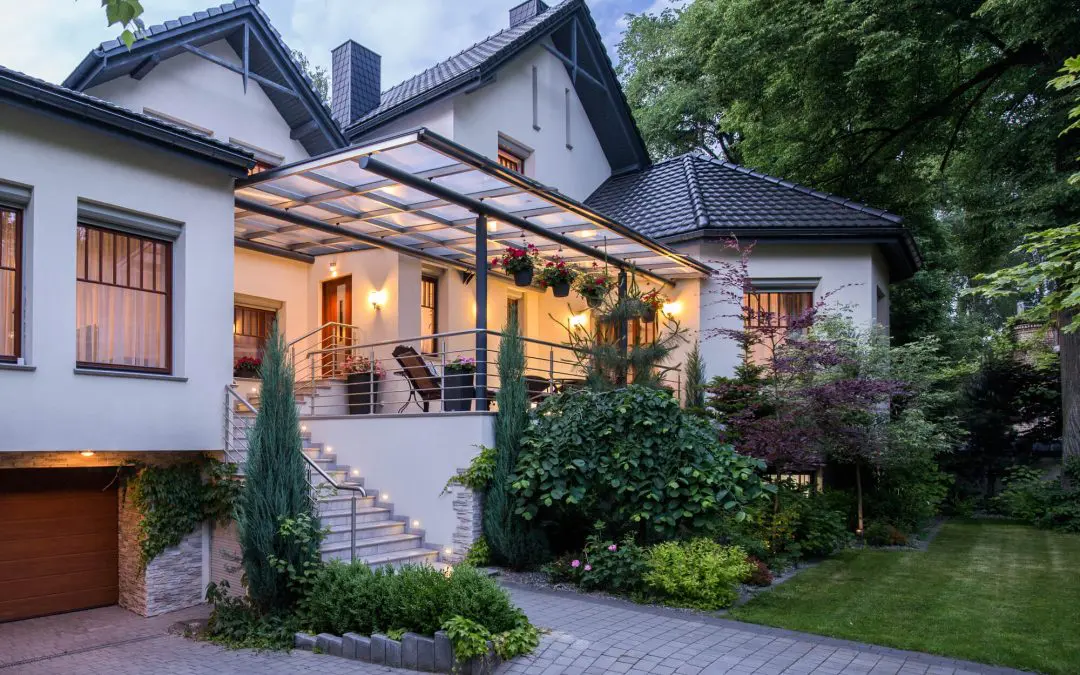
A home that looks attractive during the day could look dramatically different after dark depending on whether its exterior lighting is working with the architecture or simply illuminating it. The difference between exterior lighting that makes a home look warm, considered, and beautifully composed after dark and lighting that just makes it visible is almost entirely a matter of fixture selection, placement strategy, and understanding a few foundational lighting principles that professional landscape designers use on every project.
Exterior Lighting Principles That Transform How a Home Looks at Night
The most important shift in thinking about exterior lighting is moving from illumination as the goal to atmosphere and composition as the goal. Illumination asks: is there enough light? Composition asks: what does the light reveal, and what effect does it create? A home lit with composition in mind looks intentional and inviting. A home lit purely for illumination often looks harsh and flat regardless of how many fixtures are installed. Layering is the design principle that produces the most sophisticated exterior lighting results. Architectural fixtures at entry points provide the primary ambient layer. Uplights or downlights that graze the facade create a secondary accent layer that adds texture and depth. Pathway and landscape lighting define the ground plane and guide movement through the space. The combination at different heights produces exterior lighting that creates a genuinely memorable nighttime impression.
Color temperature has as much impact on nighttime appearance as the fixtures themselves. Warm white light produces the welcoming, residential quality that makes a home look inviting. Cooler light could make traditional and transitional homes feel cold and institutional. Consistent color temperature across all exterior lighting prevents the disjointed appearance that mismatched bulbs create.
Fixture Selection for Exterior Lighting That Suits the Architecture
Exterior lighting fixtures are architectural elements as much as they are light sources, and selecting them with the home’s architectural character in mind is the detail that elevates exterior lighting from functional to designed. The finish of the fixtures should relate to the other metal finishes visible on the exterior. A matte black fixture against a door with polished nickel hardware creates visual inconsistency that reads as unconsidered. Choosing a finish that matches or intentionally contrasts other exterior metals creates the cohesion that distinguishes a thoughtfully designed exterior.
Scale is the other fixture selection variable most homeowners underestimate. A fixture too small for the architectural element it’s attached to disappears visually. Entry fixtures flanking a front door should be proportionate to the door height; a tall door with grand proportions warrants tall, substantial fixtures. When in doubt, size up rather than down; a slightly larger fixture reads as confident and intentional, while an undersized one reads as an afterthought.
Landscape and Architectural Lighting That Enhances the Setting
Beyond the entry fixtures, the exterior lighting that most dramatically changes how a home looks at night operates at the landscape and architectural level: uplighting trees and significant plantings, grazing the facade to reveal texture, and illuminating garden features that disappear after dark. Uplighting significant trees near the home creates a canopy of illuminated foliage that adds drama and depth to the nighttime composition. A single well-placed uplight at the base of a mature tree produces more visual impact than a row of standard path lights. The key is aiming the light to illuminate the canopy rather than just the trunk.
Facade grazing, positioning a light source close to a textured exterior surface so light travels across it at a sharp angle, reveals the texture of stone, brick, or board and batten siding in ways flat illumination doesn’t. This technique produces the same warm, dimensional appearance on the actual home that it does in a well-shot listing photo.
Frequently Asked Questions (FAQs)
How do I choose the right size fixture for my front entry exterior lighting?
A general guideline for entry sconces is that fixture height should be approximately one quarter to one third of the door height. For garage-flanking fixtures, proportion to the garage door opening rather than the pedestrian door. Wall-mounted lanterns should extend no more than one third of the distance between the mounting point and the corner of the building.
What is the difference between uplighting and downlighting for exterior lighting?
Uplighting positions the light source below the subject and directs light upward, creating drama and visual height. Downlighting positions the source above and directs light downward, mimicking moonlight and producing soft, naturalistic illumination. Most exterior lighting compositions benefit from both approaches applied to different elements.
How do I avoid over-lighting the exterior of my home?
Define the key architectural features and landscape elements you want to illuminate, design the exterior lighting around those specific elements, and resist the impulse to add more. Using dimmers on exterior fixtures allows total light level to be adjusted seasonally. Less exterior lighting thoughtfully placed consistently outperforms more exterior lighting without a compositional strategy.
Should lighting fixtures match exactly or can they coordinate?
Fixtures throughout the exterior don’t need to be identical but should share a design language: the same finish, similar stylistic period, or consistent formal vs. informal quality. A safer approach is to choose a family of fixtures from the same manufacturer or collection that offers multiple form factors in the same finish: entry lanterns, wall sconces, and path lights designed to coordinate produce a unified appearance.
How much does a professional lighting design and installation typically cost?
A basic entry and path lighting upgrade using existing circuits typically runs $500 to $2,000 including installation. A comprehensive landscape and architectural exterior lighting design with quality fixtures and new low-voltage wiring typically runs $3,000 to $8,000 for a standard residential property.
Jones & Cooper Home Inspections provides home inspections to customers in the Metro Louisville area. Contact us to request our services.